A shipment is not the entire process case
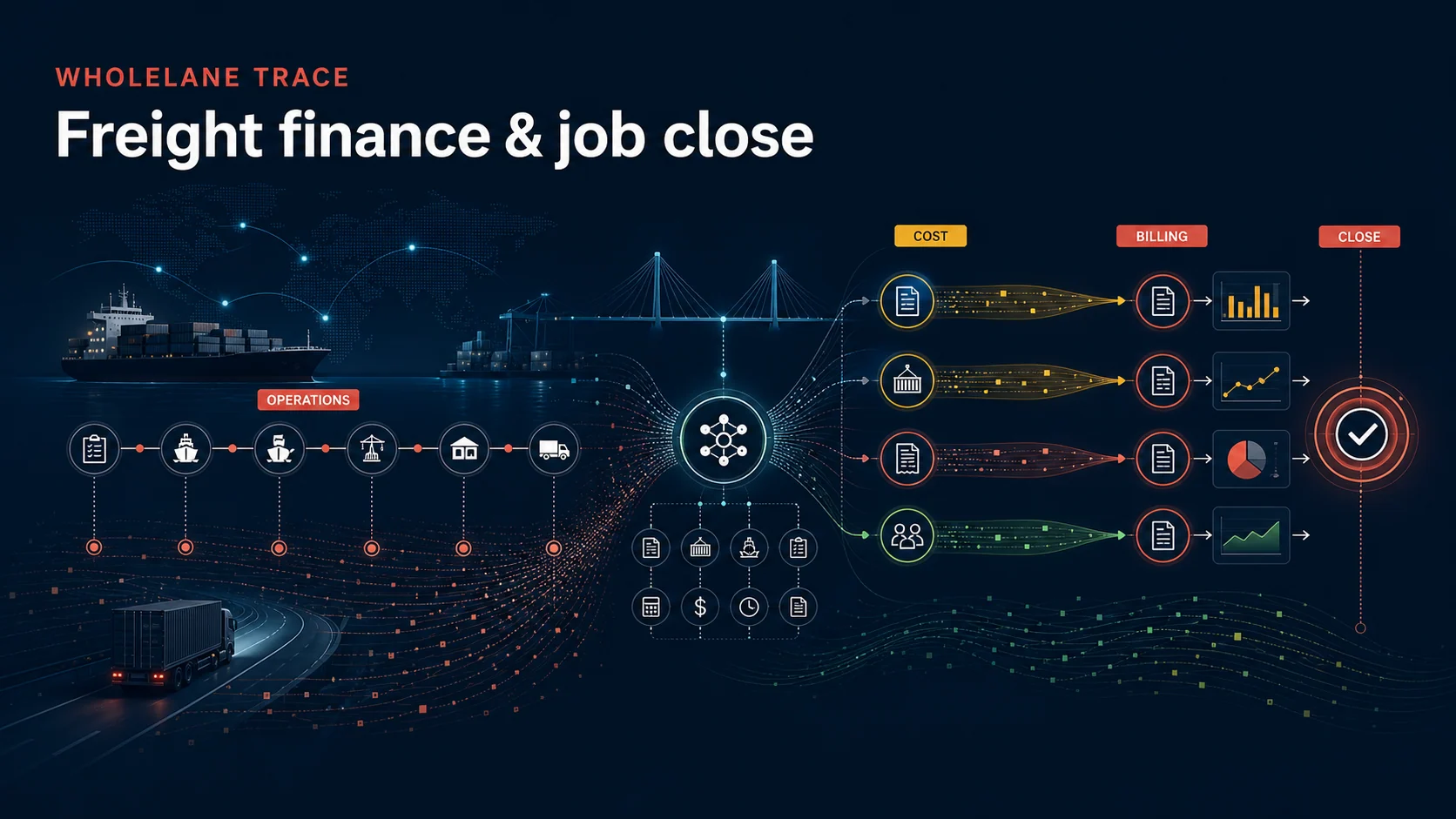
A forwarding movement may involve a customer instruction, quotation, booking, shipment, consolidation, container, declaration, transport order, document package, workflow task, charge, supplier invoice and customer invoice. One event can affect several objects at once.
A single-case event log either duplicates that event across shipments or loses the relationship. Object-centric process intelligence preserves the relationships and lets analysts ask questions at shipment, consolidation, container, declaration, work-order, customer and financial grain.
Audit evidence is valuable, but it is not the process model
CargoWise audit and history can show who changed a field, when a task changed state and how a record evolved. That evidence includes technical saves, repeated edits, metadata changes and material business transitions.
A useful pipeline therefore separates:
- raw source evidence;
- normalised evidence events;
- canonical freight activities;
- related process episodes;
- material conditions;
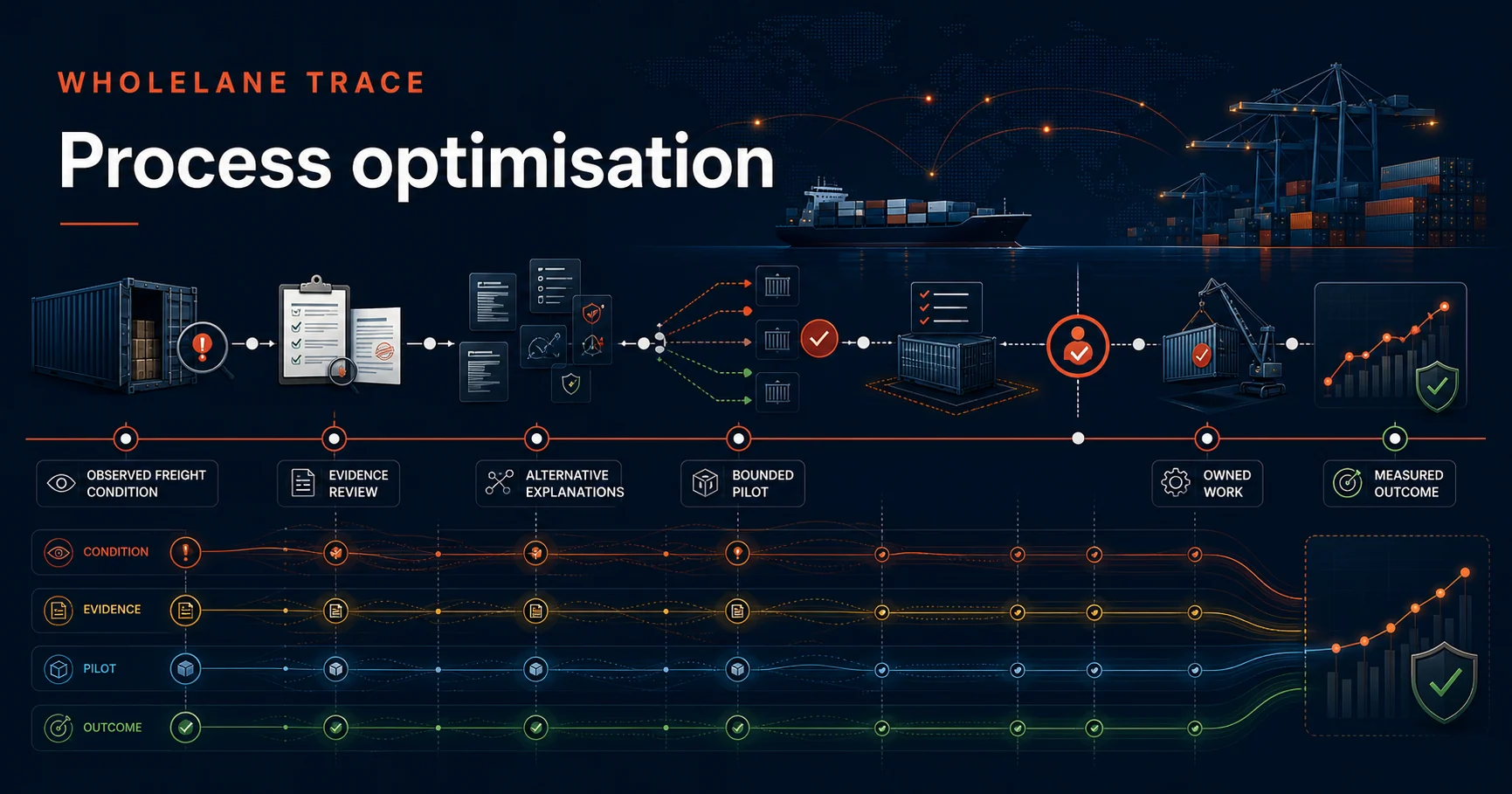
- improvement outcomes.
Capture broadly, analyse selectively and publish only meaningful signals.
Process intent matters
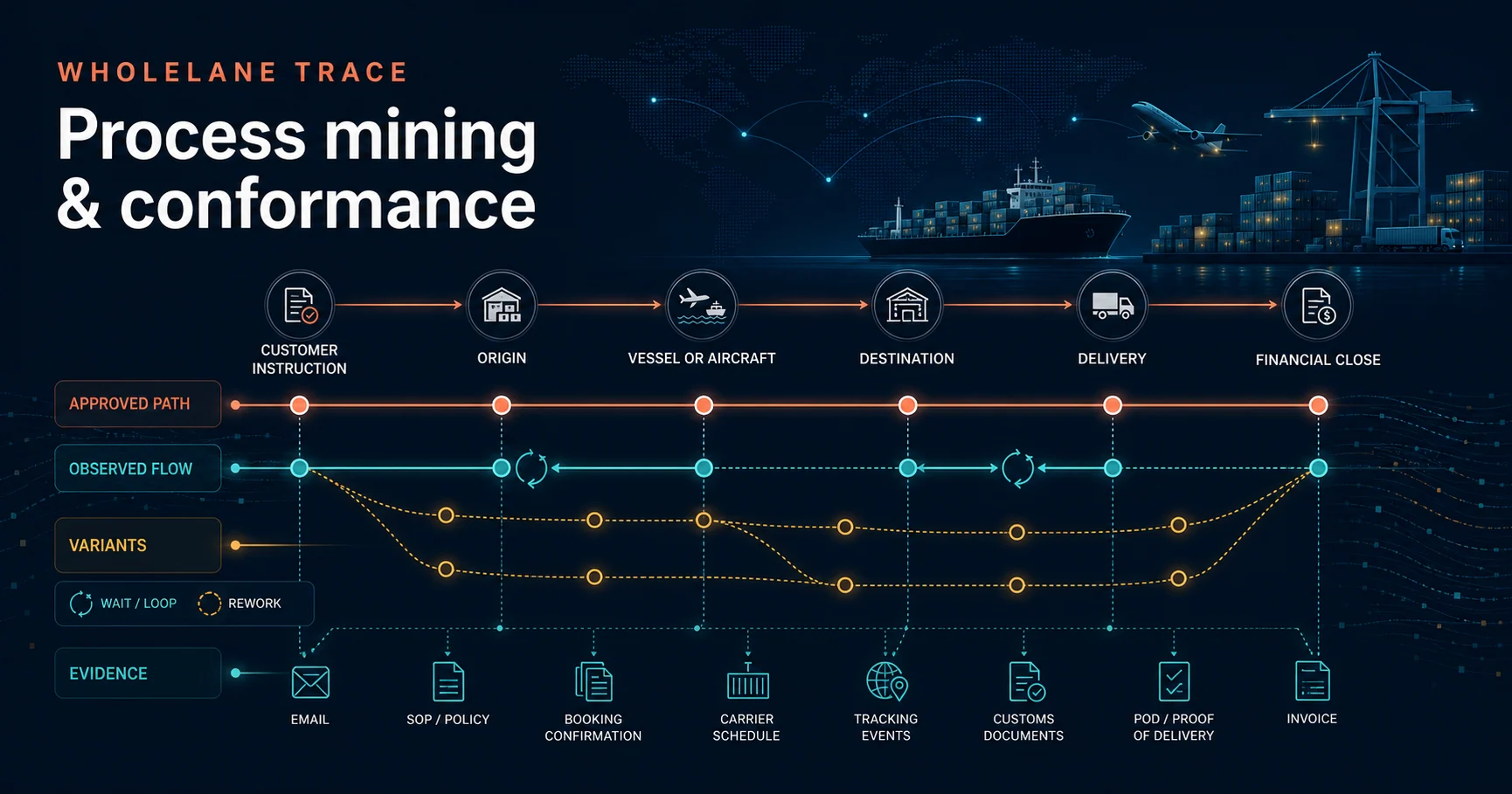
Process discovery answers, “What paths appear in the data?” It does not answer, “Which path is approved?”
The intended process comes from SOPs, work instructions, controls, service commitments, calendars and exception rules. The observed process comes from audit evidence. Discovery can reveal undocumented branches, concurrency and rework. A process owner must decide whether that behaviour is valid, an exception, a defect or a reason to revise the procedure.
This makes discovery valuable at the start of an implementation. The observed model can give operations teams a shared, evidence-backed definition of how the business works today, particularly where written procedures are incomplete or local practice has evolved. That current-state view is then validated before it becomes the basis for conformance or improvement.
Use formal models where they add control
Process Trees provide an understandable hierarchy for sequence, choice, concurrency, optional behaviour and loops. A workflow Petri net adds executable state, token and reachability semantics for conformance checking.
Formalism is not the product outcome. It is the controlled mechanism supporting practical questions:
- Was a mandatory step missing?
- Did work progress before a release gate?
- Did the process enter an unapproved loop?
- Which log-only or model-only moves explain the deviation?
- Did the same pattern affect service, customer effort or margin?
Calculate the delayed tail
Averages hide the work that creates customer chasing, escalation and cost. Forwarders should report median and tail distributions for stage dwell, handoff acceptance, queue age, exception response and financial close.
Segment results by mode, direction, service, country, branch, customer, lane, cargo profile and partner before declaring a benchmark.
Start with a bounded pilot
Ocean import FCL from confirmed booking through delivery, invoicing and close is a strong pilot because it exercises booking, shipment, consolidation, container, customs, transport, delivery and finance relationships.
The pilot should answer:
- What process is actually followed?
- Where does time accumulate?
- Which deviations are controllable?
- What customer and financial effect follows?
- Which intervention is justified?
Next: Explore Wholelane Trace