
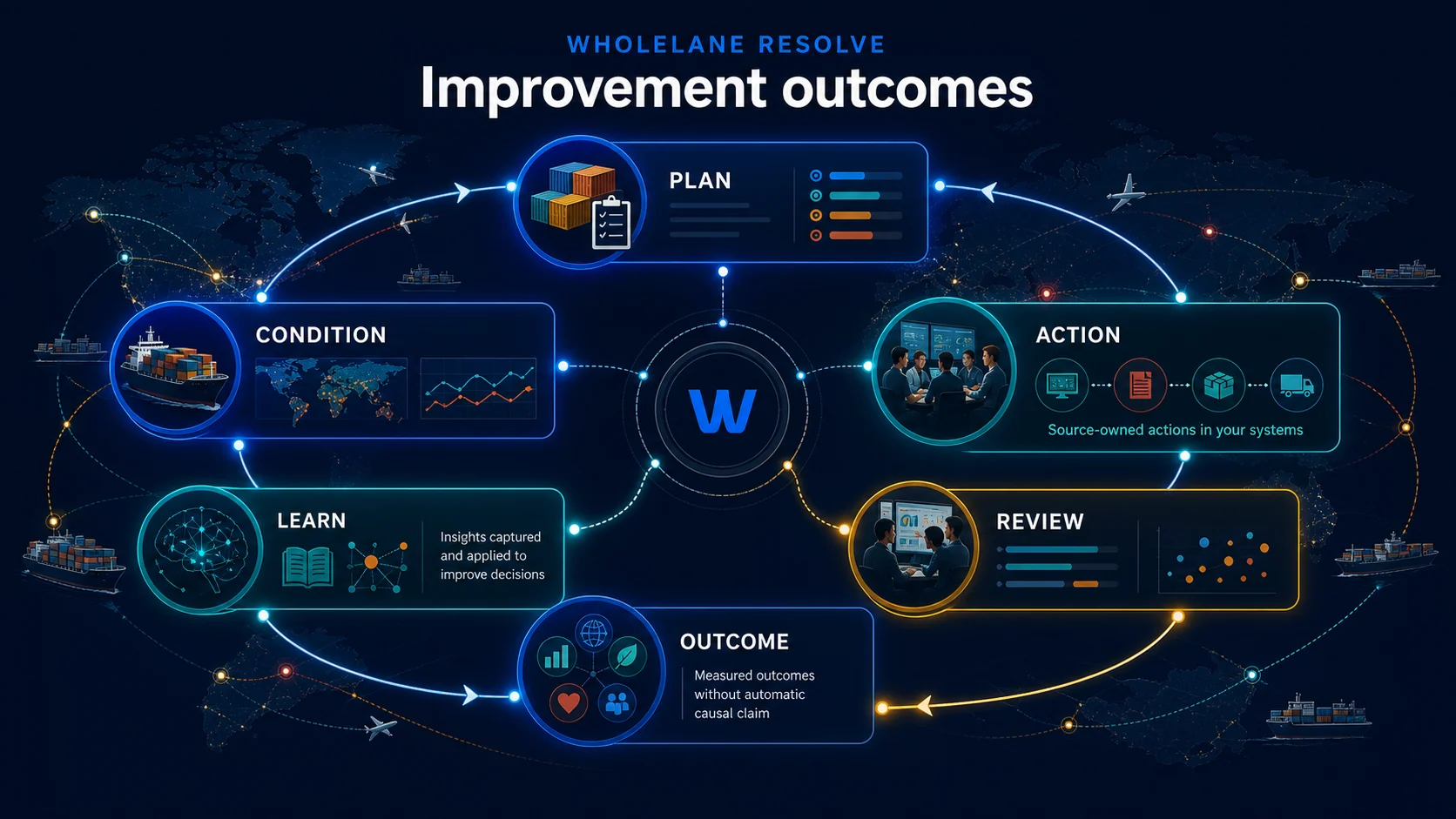
Start with the condition, not the solution
“Train the team” and “automate the process” are solution labels. They do not explain which condition is being changed or why the proposed mechanism should work.
A usable condition includes scope, evidence, direction, persistence, materiality and interpretation limits.
Explain how the change should work
Consider a recurring origin-to-destination handoff delay. If evidence shows that complete files arrive but wait for a receiving owner, the intervention is to make that ownership explicit. The expected chain is clear: faster acknowledgement, fewer clarification loops and earlier customer communication.
A different cause needs a different response. Concentrated customer knowledge may call for a secondary owner; incomplete cost evidence may call for an expected-cost rule; work bouncing between queues may call for shared exception ownership. Each intervention should exist because it addresses an observed operating mechanism, not because it sounds like generally good practice.
Define success and adverse effects
Success measures should include leading condition measures and the relevant business outcome. Also identify what must not deteriorate.
For the handoff example, success would mean that more packages are accepted first time, decisions arrive sooner and work spends less time bouncing between queues. The review should also test what must not worsen: error and rework rates, customer-update timing and dependence on one coordinator. That balance prevents a faster process from being mistaken for a better one.
Keep source actions with the correct authority
Trace owns process actions. Weave owns organisational interventions. Resolve coordinates the operating plan and combined review. Operational systems and authorised people continue to execute the actual change.
Turn the review into a decision record
At the review date, the team should be able to say whether the intervention was effective, partly effective, ineffective, inconclusive, not implemented or associated with an adverse effect. The classification should retain the evidence and context behind the decision, so the next team can understand what worked rather than inherit a label without a story.
Build an evidence base
Over time, intervention evidence can show which playbooks are useful in a specific operating context. It should not become automatic action without governance, because context and unintended effects still matter.