Start with context, not a conclusion
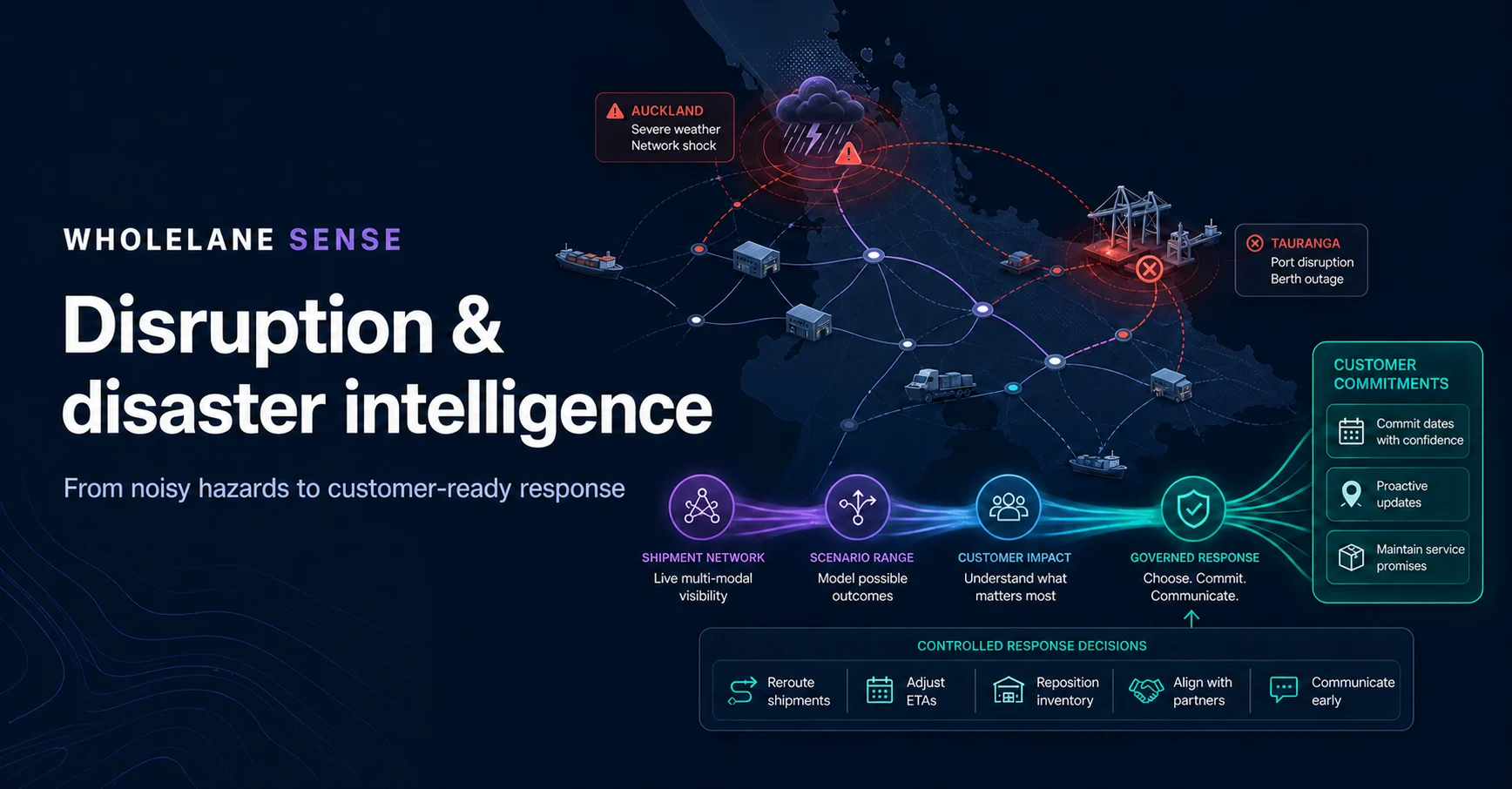
Weather, port, carrier and infrastructure feeds describe hazards. They do not automatically prove that a specific shipment is late or a customer commitment will be missed.
Match the signal to place, route, time window, mode and freight object before it enters a decision view.
Distinguish the operating state
- A warning means exposure is plausible but the impact is not confirmed.
- A matched disruption has corroborating operational evidence.
- A loss of visibility means expected evidence is missing or stale.
These states support early communication without overstating what is known.
Model the scenario range
Show the likely milestones, readiness gates and customer commitments under credible scenarios. Keep the assumptions and confidence visible. A scenario is a planning aid, not an operational fact.
Bring the decision to the authorised team
The response may include protecting capacity, reviewing routing, aligning with partners or communicating early. The product should identify the response window and responsible role; people and authorised source systems execute the decision.
Learn after the network recovers
Retain which signals were matched, what was known, what action was taken and how the outcome changed. This is how false positives, provider reliability and operating playbooks improve over time.